



What’s up, Otaku Bettors!
Hey — are you Otaku Bettors actually interested in the history of the game!?
Didn’t think so.
But hey — knowing a game’s history never hurt anyone, so read through this page nice and carefully and get yourself up to speed on roulette history!
The Origins of Roulette (From Ancient Times to the Renaissance)
Roulette’s roots go way, way back — we’re talking ancient history.
The most well-known precursor to roulette is a game called Hoca — said to be a favorite of King Louis XIV — known as E-O in England and Boule in Switzerland, which from the mid-17th century into the 18th century came to be known as Roulette in France.
The point is, games similar to roulette have existed since ancient times — not in exactly the same form, but the concept of using a spinning object as a game of chance has been around since ancient Greece and Rome.
Games of Chance in Ancient Greece and Rome
Ancient Greek and Roman soldiers apparently used to balance a sword on a shield, spin it around, and bet on where the tip would land when it stopped.
Apparently they had nothing better to do.
Hey — wasn’t there a war to fight!?
There were also reports of a game in Roman times where colored balls shaped like chariots were rolled inside an enclosure, and there’s even a story of Emperor Augustus placing bets by laying a chariot wheel flat, balancing a jar upright on top, and spinning it.
Of course, it’s not quite the same as modern roulette — but the idea of “betting on a spinning object” goes back to antiquity.
The similarities between these spinning chariot wheels and shields and the roulette wheel are why some suggest they may be among roulette’s earliest predecessors — though the evidence is far from clear.
The Chinese Connection
Another theory is that an ancient Chinese game may have influenced roulette.
In China, there was apparently a game of chance using a disk decorated with pictures of animals.
The story goes that it made its way to Europe, was refined by monks, and may have become the basis for roulette — though solid evidence is thin here too, so make of that what you will!
The Japanese Connection
Japan had its own version too — a game called “Densuke (Dokko Idokko).”
A stick was set horizontally at the center of a disk and spun — whichever direction it stopped in (east, west, south, or north) was the winning slot, and apparently this gambling game was quite popular.
As a side note, roulette is said to have reached Japan around the end of the Meiji era, though some sources suggest it arrived as early as the late Edo period.
Either way, it seems to have arrived around that era.
Spinning Wheel Games of the Renaissance
In 16th-century Italy, gambling with spinning disks was apparently quite popular.
The exact name isn’t known, but the format involved a rotating disk marked with numbers and symbols, with players betting on the outcome — sounds familiar, right?
So by this point, something that could reasonably be called a predecessor to roulette was almost certainly already in existence.
The Birth of Roulette (Its Evolution in France)
After roulette-like games popped up in various places, the form closest to modern roulette was established in 17th-century France.
The word “roulette” itself means “little wheel” in French.
This is documented in the Encyclopédie (1751–1772) by the renowned French Enlightenment thinker Denis Diderot.
It was during this era that the foundations of roulette took shape.
The classical form of roulette perfected in France was actually the same as what we now call American roulette — divided into 38 sections: zero, double zero, and numbers 1 through 36!
You might have assumed single zero came first — apparently not.
Single-zero roulette was invented in 1841 by the Blanc brothers — French nationals who were running a casino in Bad Homburg, Germany at the time. As I’ll explain below, the Monte Carlo casino that adopted it early on became the gambling capital of Europe almost overnight, thanks to the popularity of this new style of roulette.
There are also various accounts of how roulette arrived in Paris — apparently, alongside the 38-number wheel, there was also a roulette with only 23 numbers.
This was known as “Poor Man’s Roulette” — low stakes, accessible to ordinary people, commonly found in rural French casinos and German gaming halls.
Apparently it wasn’t exactly a money-maker, though — Poor Man’s Roulette.
There’s another interesting theory — that it was actually a police officer who introduced roulette to France.
In 1765, with Paris overrun by rigged gambling games, one police officer set out to find a game with genuinely fair odds. In his search, he eventually landed on roulette — a game that couldn’t be rigged — and went on to spread it among the public.
Roulette really does have no shortage of colorful stories.
Blaise Pascal and Roulette
Blaise Pascal, the French philosopher and mathematician, is often said to have played a major role in the development of roulette — though more recently, there are those who argue this is a misconception.
In the 1640s, Pascal was apparently studying probability using a 36-slot wheel — but the claim that he was “developing roulette” is said to have simply been passed down as fact later on.
History sure has a way of rewriting itself.
Ugh, so tedious.
The French Revolution and the Rise of Roulette Culture
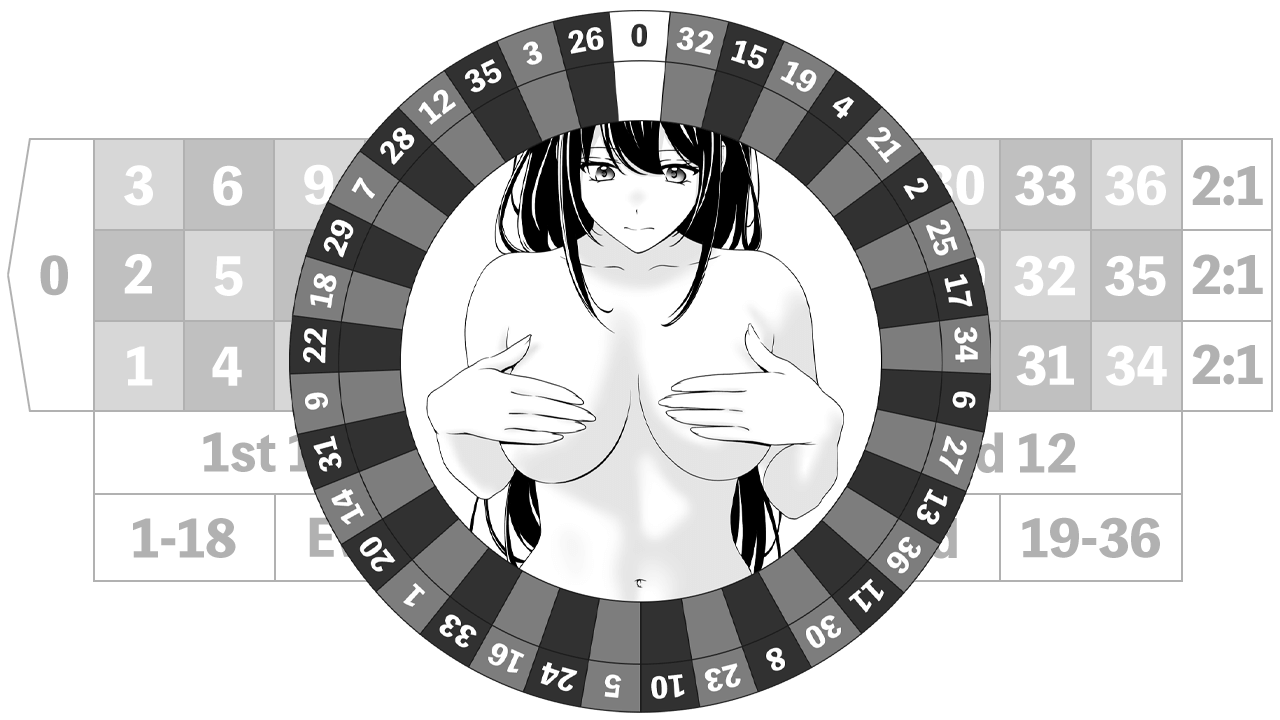
In 18th-century France, roulette was popularized by Paris Police Commissioner Sartine — credited with legalizing gambling — and in the tumultuous period following the French Revolution, it became wildly popular among the nobility and upper classes.
By this point, a format close to modern roulette had taken shape, and the single-zero roulette that would later be invented by the Blanc brothers was apparently already in existence.
The exact origins of roulette remain unclear, but it’s pretty certain that its popularity spiked dramatically during this period.
François Blanc and Monte Carlo (The Golden Age of Roulette)
One of the most important figures in the spread of roulette was François Blanc — a 19th-century French casino operator.
He invented single-zero roulette and did more than anyone to bring roulette to the world.
This will be on the test!
The Monte Carlo Casino and the Spread of Roulette
In 1843, François Blanc and his brother Louis opened a casino in Baden-Baden, Germany, where they spread the game of roulette.
Around the same time, Prince Charles II of Monaco apparently sold a casino he owned to a French syndicate, which the Blanc brothers then purchased and rebuilt in 1863. Single-zero roulette became a massive hit, and Monte Carlo, Monaco transformed into the gambling capital of Europe — a destination for the wealthy and nobility from across the continent!
The success at Monte Carlo set the stage for roulette to spread to casinos around the world, cementing what became known as the Golden Age of Roulette.
By the way, apparently François Blanc was also a shady stock speculator.
Not just a gambler — a fraudulent speculator. Think of him as the 19th-century equivalent of a sketchy influencer or a small-time crook.
The Rise of American Roulette (Roulette Goes Global)
During the frontier era, roulette — already a massive hit in Europe — made its way to America.
America was originally home to Native Americans, who, as it turns out, apparently had quite a fondness for gambling themselves.
The Introduction of the Double Zero (00)
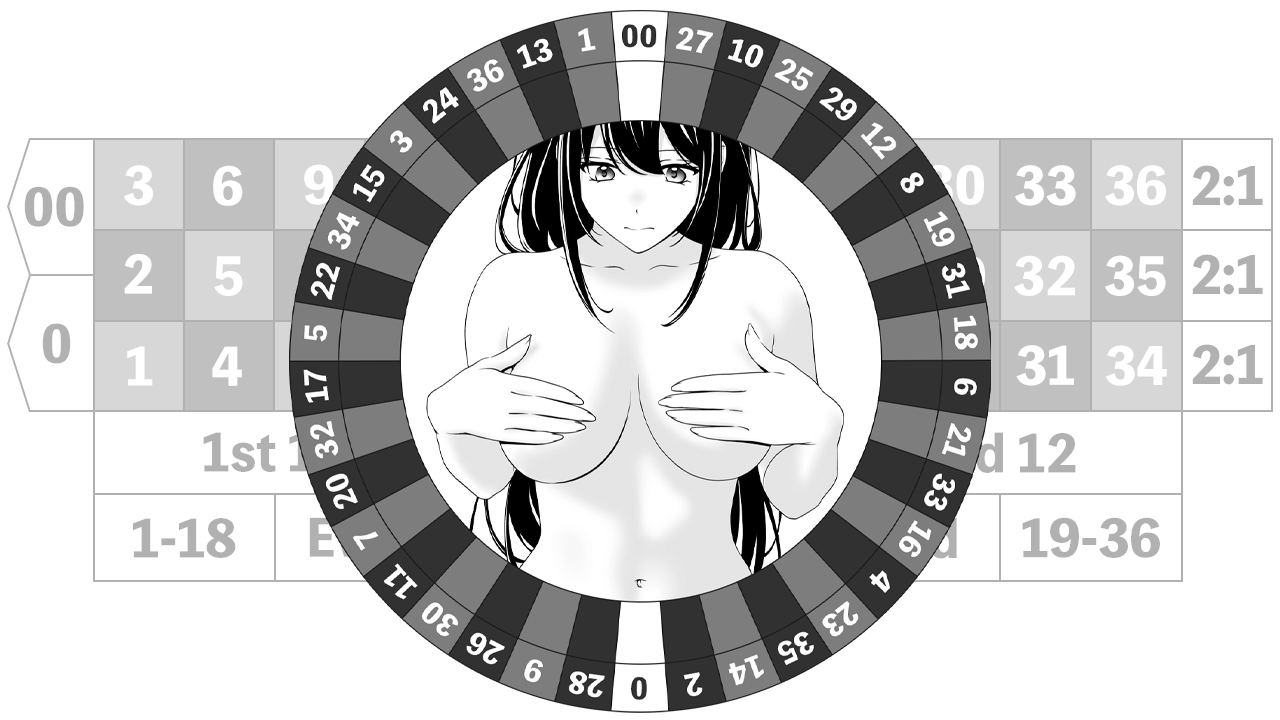
American casinos adopted the double zero (00) to maximize the house’s take.
Various theories exist here too, but one common misconception is that the double zero was invented in America. The original classical roulette already had a double zero — they didn’t invent something new.
On top of the differences in zeros and wheel layout, European and American roulette also differ in how the game is played.
The main differences are game pace and how chips are placed.
The European version has more ceremonial procedures — honestly, it’s a bit of a drag.
In the European version, the croupier (dealer) uses a rake to place chips in the specified spots at the player’s direction; in the American version, players place their own chips directly by hand.
As a result, the European version tops out at around 20 spins per hour, while the American version can fit in nearly twice as many.
One last piece of double-zero trivia — something that even roulette connoisseurs often don’t know.
Apparently, Wild West-era roulette wheels sometimes had a third pocket alongside 0 and 00 — called the “Eagle,” marked with an eagle symbol!!!
Pretty obscure, right!?
Search for it online and you’ll probably only find The Otaku Bettor talking about it.
Don’t worry though — I’ve read sources from around the world!
And that’s your complete roulette history lesson.
Now go memorize all of it!

